
Why Thread Lifts Can’t Correct Facial Sagging
When It’s Time to Consider a Facelift
Considerable effort has been made to achieve facelift-like results using thread lifting. While thread lifts can be effective for selected patients with mild skin laxity, they inevitably have limitations. Today, I’d like to explain why.
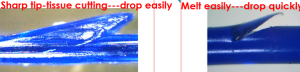
For a thread lift to elevate sagging facial tissues, the thread must first obtain a secure grip on the tissue. This is accomplished using tiny barbs (also called cogs) along the thread.
If these barbs are made very thin—much like the fine bones of a herring—they can engage the tissue easily. However, because they are delicate, their holding strength gradually weakens as the absorbable thread dissolves over time, leading to a loss of lifting effect.
On the other hand, if the barbs are designed to be larger, sharper, and more rigid—similar to the teeth of a shark—they initially provide a much stronger grip. The problem is that the facial tissues are constantly subjected to gravity and repeated movements from facial expression muscles. As downward forces continue to act on the tissue, the barbs may eventually tear through the tissue instead of continuing to support it. When this happens, the lifted tissue gradually descends again.
To compensate for this limitation, many thread lift techniques incorporate additional anchoring threads that secure the lifting threads to more stable structures. These fixation threads are intended to improve support and prolong the lifting effect. However, even with these modifications, the treatment still depends on the mechanical holding strength of the thread-tissue interface, which ultimately has biological and structural limitations.
However, improvements in thread design alone are not enough. Equally important is the development of proper insertion techniques.
Successful thread lifting requires a thorough understanding of facial anatomy, particularly the relationship between the skin and the superficial musculoaponeurotic system (SMAS). Facial skin does not stretch uniformly with aging. Instead, the greatest laxity develops in areas subjected to repeated movement from facial expression muscles.
If a barbed thread is placed directly beneath these highly mobile areas, the rigid barbs may gradually rotate or “roll” within the tissue as the face moves repeatedly during everyday expressions. As the thread rotates, its barbs can catch and tether the surrounding tissue, creating visible skin depressions or puckering—a complication commonly known as dimpling.
To minimize this risk, thread placement should avoid regions where the skin repeatedly folds like an accordion during muscle contraction. This is particularly important over areas influenced by the platysma and buccinator muscles, where repetitive motion places continuous mechanical stress on both the thread and the surrounding tissues.
Careful selection of the insertion plane and trajectory is therefore just as important as the design of the thread itself. Even the most advanced thread cannot achieve optimal results if it is placed in a location exposed to excessive dynamic movement.

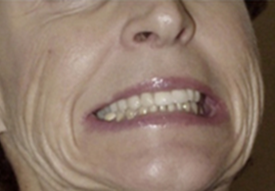
As the anterior portion of the zygomatic bone gradually undergoes resorption with aging, I believe that the superficial malar fat pad loses its underlying bony support and begins to descend. As this occurs, the zygomatic retaining ligament, which is closely associated with the overlying soft tissues, is displaced inferiorly as well. This downward shift contributes to the development of the nasolabial fold and jowl deformity.
From my perspective, the primary objective of a thread lift is to reposition the zygomatic retaining ligament in a superolateral direction.
The zygomatic retaining ligament is firmly attached to both the periosteum of the zygomatic bone and the overlying skin. Because of these strong attachments, it serves as one of the principal anchoring structures supporting much of the midfacial soft tissue. Consequently, this region is continuously subjected to substantial downward forces generated by gravity and repetitive facial movement.
For a thread lift to produce durable results, the lifting force applied to this ligament must be sufficiently strong to withstand these continuous mechanical loads. If the supporting force of the thread is weaker than the downward forces acting on the tissues, the elevated tissues will gradually descend again, regardless of the initial lifting effect.
Thread lifting provides only temporary support for the tensile forces generated during the repositioning of ptotic facial soft tissues. Although the threads can maintain tissue position during the early postoperative period, they are unable to resist the persistent biomechanical loading imposed by facial animation, mastication, speech, and gravitational forces. Consequently, gradual tissue descent is inevitable over time.
The fundamental objective of facelift surgery is therefore not merely to elevate soft tissues but to reconstruct the facial support system. Following adequate release of the retaining ligaments, the mobilized soft tissues are repositioned and securely stabilized at a higher anatomical level. Through stable fixation of the deep fascial and muscular layers, a new biomechanical support framework is established that effectively substitutes for the function of the native retaining ligaments. This reconstructed support system is capable of dissipating and resisting continuous mechanical loading, thereby contributing to the long-term durability of facelift outcomes.
I am text block. Click edit button to change this text. Lorem ipsum dolor sit amet, consectetur adipiscing elit. Ut elit tellus, luctus nec ullamcorper mattis, pulvinar dapibus leo.